
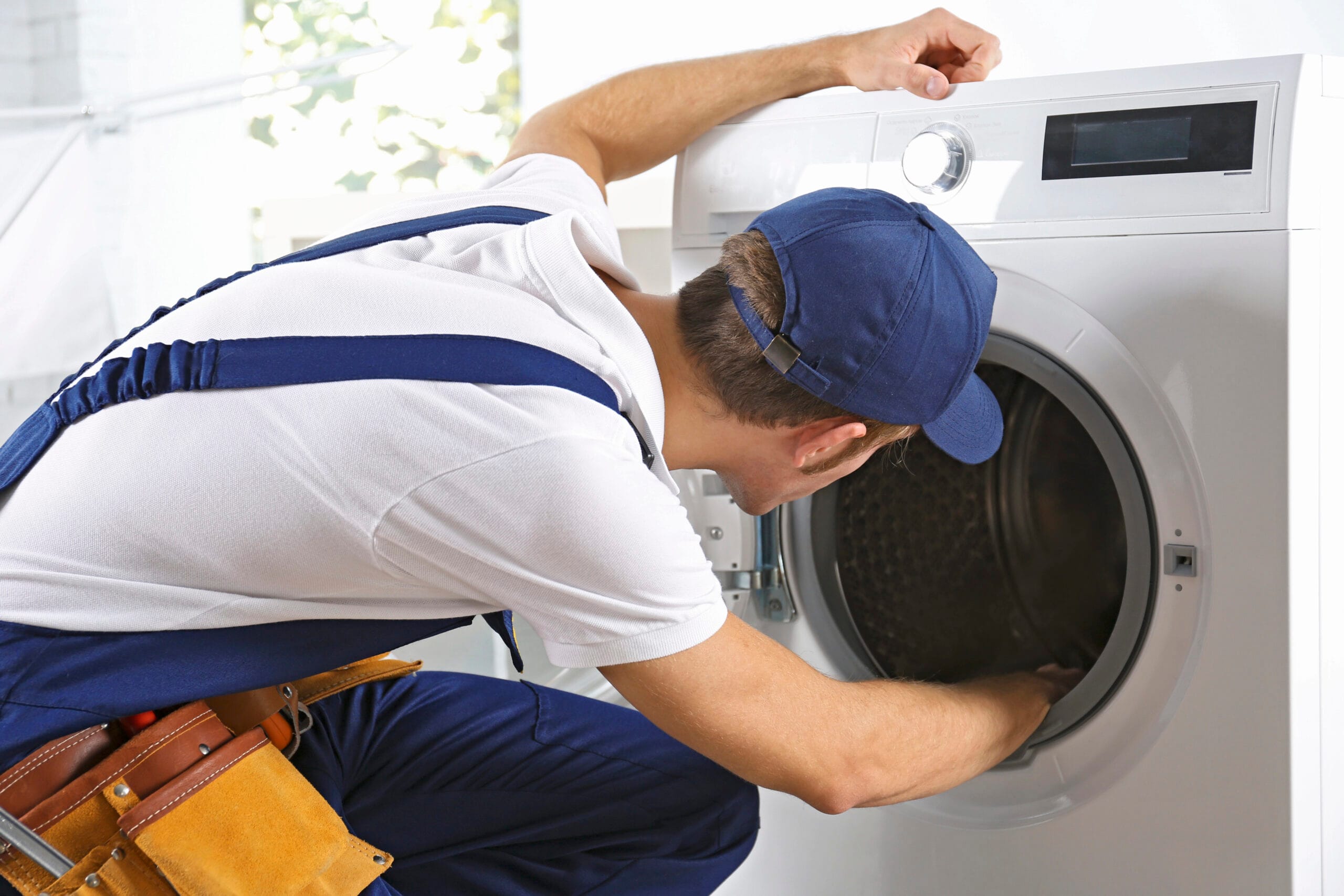
If your washer hits the spin cycle and suddenly sounds like it’s trying to join the rail yard, don’t ignore it. A grinding spin cycle is one of the clearest “something’s wrong” signals a washing machine can give you. Sometimes the cause is simple. Other times, every extra load you run can turn a fixable repair into a much bigger bill. Here’s how to understand what that grinding sound usually means, what commonly causes it, and when it’s time to book a professional appliance repair in Transcona:
What “Grinding During Spin” Usually Means
The spin cycle is the most demanding part of a wash. The drum ramps up to high speed, the motor and drive system work harder, and the machine relies on bearings, pulleys, suspension, and balance sensors to keep everything stable. When you hear grinding during spin, it typically means one of two things is happening:
- Something is rubbing or scraping that shouldn’t be, like a foreign object caught where it doesn’t belong.
- A moving part is wearing out, like bearings, a pulley, the drive system, or a pump component.
A quick note: Not every “rough” sound is an emergency. A brief change-of-direction noise or a short “grrr” as the washer starts to spin can be normal on some models. What’s not normal is a persistent grinding sound, especially if it’s getting louder, happens every load, or comes with vibration, leaking, or performance issues.
Common Causes Of A Grinding Spin Cycle
Foreign Object
This is one of the most common culprits, especially in households with coins, screws, bra wires, or small kids’ items that live in pockets. A foreign object can slip between the inner drum and outer tub, get stuck in the door boot area on front-load washers, or end up near the drain pump.
Clues it’s a foreign object:
- The grinding appeared suddenly.
- You hear a scraping, ticking, or intermittent grind that changes as the drum rotates.
- You recently washed something with metal pieces (zippers, underwires, workwear).
Left alone, a small object can score the tub, damage seals, or jam a pump – so it’s worth taking seriously.
Worn Drum Bearings
Bearings help the drum spin smoothly. When they wear out, you’ll often hear a low, rough grinding or rumbling that gets worse over time. Bearing failure can also be connected to a failing tub seal, allowing moisture to reach the bearings.
Clues it’s bearings:
- The sound gradually got louder across multiple loads.
- The drum feels rough or “gritty” if you rotate it by hand (with the machine off).
- You notice excess vibration during spin, even when loads are balanced.
- You see brownish streaking or residue near the back or underside (not always present, but common).
Bearing repairs are labour-intensive and usually require disassembly that’s best handled by a technician.
Drive Pulley Or Belt Issues
Many washers use a belt and pulley system to transfer power from the motor to the drum. If a belt is worn, stretched, or slipping, or if a pulley is damaged or misaligned, you may hear grinding, squealing, or a rough scraping sound – often most noticeable as the washer accelerates into high spin.
Clues it’s belt or pulley related:
- The sound is worse when the drum speeds up.
- You may smell hot rubber in more severe cases.
- The washer struggles to reach full spin or sounds strained.
This may seem simple to fix, but incorrect tensioning or alignment can cause repeat failures.
Motor Or Drive System Wear
In some washers, a failing motor, coupler, transmission/gearcase component, or other drive parts can create a grinding sound, especially under the load of spinning a wet drum at high speed.
Clues it’s the motor or drive system:
- The washer hesitates, surges, or stops mid-cycle.
- You get inconsistent spin performance (sometimes it spins, sometimes it won’t).
- The noise is paired with a burning smell, unusual humming, or repeated restarting.
These issues need proper diagnosis because multiple parts can create similar symptoms.
Drain Pump Problems
A grinding sound can also happen during the transition where the washer drains and spins. If the drain pump is jammed with debris, worn internally, or partially blocked, it may grind, buzz, or sound harsh – sometimes only when water is moving quickly.
Clues it’s the drain pump:
- The noise is strongest right before or during draining.
- You notice slow draining, standing water, or wet clothes after the cycle.
- The sound is more “mechanical buzz/grind” than “metal scrape.”
Pump issues can escalate fast if the pump overheats or fails completely.
Overloading Or An Unlevel Washer
This is the “best case” cause, but it still matters. Overloading can strain the suspension and make parts rub or vibrate. An unlevel washer can cause the drum to wobble, which may sound like grinding or thumping during spin.
Clues it’s load or levelling:
- The noise happens mainly with heavy loads (towels, bedding, blankets).
- The washer visibly shakes or “walks.”
- The floor is uneven, or the washer was recently moved.
Fixing load size and levelling can solve it – but if grinding persists even with a small, balanced load, it’s time to look deeper.
Quick Safety Steps Before You Do Anything
- Stop the cycle as soon as you hear persistent grinding.
- Turn the washer off and unplug it if it’s safe to access the plug.
- Shut off the water supply if you see leaking, pooling, or dripping.
- Do not run another load “to test it” if the sound is loud or worsening.
- Keep kids and pets away while you check around the machine.
- Avoid moving the washer alone (they’re heavy and awkward, especially in tight laundry rooms).
- Do not reach into moving parts or attempt disassembly without the right tools and safety steps.
Red Flags That Mean “Call A Pro Now”
Grinding All Cycle
If the washer grinds through wash, drain, and spin, it’s unlikely to be “just balance.” Continuous grinding often points to worn bearings, drive components, or a stuck object, causing ongoing damage.
Metal Scrape / Loud Banging
Metal-on-metal scraping or heavy banging during spin is a “stop immediately” situation. Continuing can damage the tub, drum supports, suspension, or even cause a leak.
Burning Smell / Breaker Trips
Any burning smell, electrical odour, smoke, or repeated breaker trips needs professional attention right away. That’s not a “finish the cycle” problem.
Leaks Or Greasy Streaks
Water under the washer, repeated dampness, or brown/greasy residue can signal seal and bearing problems – or a pump issue that’s about to become a flood risk.
Error Codes Or No Steady Spin
If you’re getting error codes, repeated stopping, or a drum that won’t spin consistently, the machine is telling you it can’t operate safely or correctly without repair.
Why Professional Appliance Repair Saves Money For Transcona Residences
It’s tempting to Google the sound, watch a quick video, and start ordering parts. The issue is that the washer noises overlap. A grinding sound might be a foreign object, a pump, bearings, or drive wear, and replacing the wrong part first is a common way repairs get expensive.
A professional diagnostic helps you:
- Pinpoint the root cause instead of guessing and swapping parts.
- Prevent secondary damage (a small issue can take out larger components if ignored).
- Avoid water damage in your laundry area, basement, or adjacent finished spaces.
- Stay safe around water, electricity, and heavy, moving equipment.
- Protect warranties on newer units where DIY repairs can complicate coverage.
- Get the repair done right the first time, with the correct parts and proper installation.
For many Transcona homes, laundry setups can be in tighter utility areas where leaks or vibration can cause extra headaches fast. A timely repair is often the difference between a straightforward fix and an appliance replacement you didn’t budget for.
Book A Diagnostic Before The Next Load Makes It Worse
If your washer is grinding during spin in Transcona, stop the cycle and book a diagnostic before the damage spreads. For fast scheduling of appliance repair in Winnipeg, contact us today to lock in a time that works best for you.
A quick visit can confirm what’s happening, what it will take to fix, and whether repair or replacement makes the most sense for your washer’s age and condition. The sooner you catch it, the more likely it is to stay a repair instead of a full-on laundry room crisis.